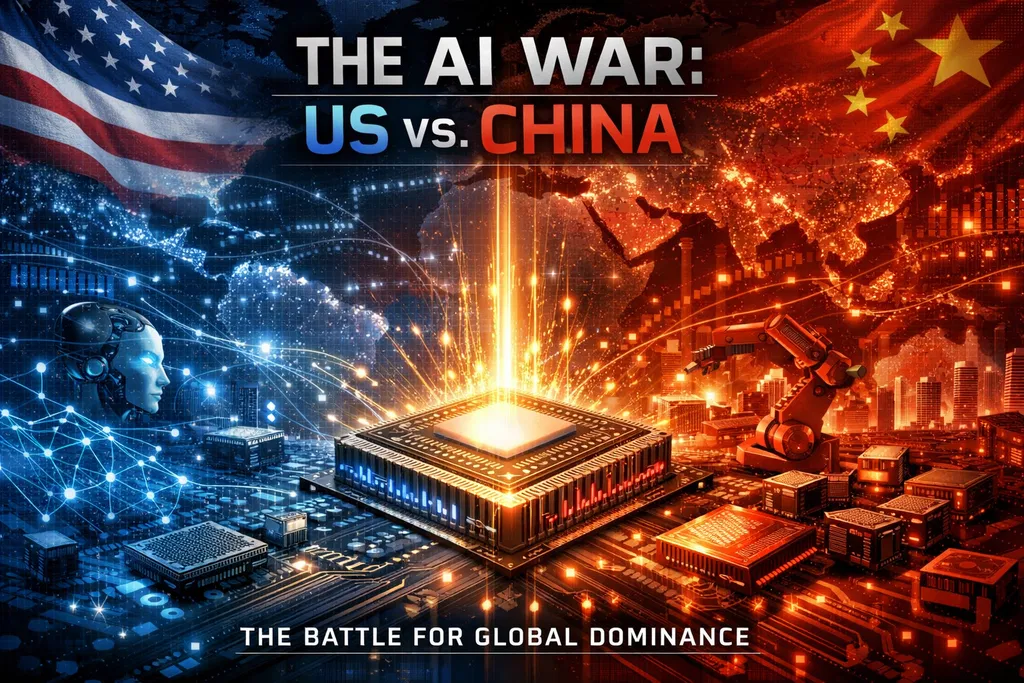
In the 21st century, a new kind of war is being waged, not with bullets and bombs, but with algorithms and data. The **Artificial Intelligence (AI) War** between the United States and China is rapidly escalating, shaping the future of global power and technological supremacy. This isn’t just a race for innovation; it’s a fundamental struggle that will redefine economic, military, and societal landscapes worldwide. As these two superpowers pour unprecedented resources into AI development, the implications for the rest of the world are profound. Understanding this technological arms race is crucial for anyone looking to comprehend the evolving geopolitical order.
The Stakes: Why AI is the New Frontier
AI is not merely another technological advancement; it is a “general-purpose technology” with the potential to revolutionize every sector. Its applications range from enhancing military capabilities and economic productivity to transforming healthcare, education, and daily life. For both the US and China, dominance in AI translates directly into:
Economic Supremacy: AI is projected to add trillions of dollars to the global economy. The nation that leads in AI will control the next wave of economic growth, creating new industries and jobs while potentially rendering others obsolete.
Military Advantage: AI-powered autonomous weapons, advanced surveillance systems, and intelligent logistics can provide a decisive edge in modern warfare. The ability to process vast amounts of intelligence data faster and more accurately can shift the balance of power.
“Geopolitical Influence:” Control over cutting-edge AI technology allows a nation to exert greater influence on international norms, standards, and global governance, shaping the future in its image.
China’s Ambitious AI Strategy: Made in China 2025 and Beyond
China has made no secret of its ambition to become the world leader in AI by 2030. Its strategy is comprehensive and state-driven, leveraging its vast population, data resources, and centralized planning. Key aspects include:
National AI Development Plan: Launched in 2017, this plan outlines a roadmap for China to catch up with and surpass the US in AI by 2030, with specific targets for research, development, and application.
Massive Investment: The Chinese government and private sector are investing hundreds of billions of dollars into AI research, startups, and infrastructure. Companies like Baidu, Alibaba, Tencent, and Huawei are at the forefront of this push.
Data Advantage: China’s large population and less stringent privacy regulations provide an unparalleled amount of data, which is the lifeblood of AI development. This data fuels everything from facial recognition to personalized services.
Talent Cultivation: China is aggressively investing in AI education, establishing AI institutes, and attracting top talent from around the world.
The United States’ Response: Innovation and Collaboration
The US, while initially complacent, has recognized the threat and is now accelerating its own AI efforts. Its approach is more decentralized, relying on its strong innovation ecosystem, leading universities, and private sector giants.
Private Sector Leadership: Silicon Valley tech giants like Google, Amazon, Microsoft, and Apple are global leaders in AI research and application, driving much of the innovation.
Defense and Intelligence Investment: The Pentagon and intelligence agencies are integrating AI into national security strategies, focusing on areas like autonomous systems, cybersecurity, and data analysis.
International Partnerships: The US is actively seeking to collaborate with allies in Europe, Asia, and other regions to pool resources, share expertise, and establish common ethical guidelines for AI development.
Ethical AI Frameworks: There’s a growing emphasis on developing AI responsibly, with a focus on ethics, transparency, and accountability, contrasting with China’s more utilitarian approach.
Key Battlegrounds in the AI War
The competition spans several critical domains:
* **Semiconductors:** The advanced chips required to power sophisticated AI systems are a major bottleneck. The US has imposed export controls on advanced chip technology to China, aiming to slow its progress.
* **Data:** The sheer volume and quality of data are crucial. Both nations are vying for access to diverse datasets.
* **Talent:** The best AI researchers and engineers are in high demand globally. Both countries are competing to attract and retain top talent.
* **Research & Development:** Universities and research institutions in both countries are at the forefront of pushing AI boundaries, from fundamental research to applied solutions.
* **Ethical Norms & Governance:** The debate over how AI should be regulated and used ethically is a key ideological battleground, with implications for global standards.
The Impact on the Global Landscape
The AI War has far-reaching consequences:
* **Bifurcation of Technology:** The world could see a split into two distinct technological ecosystems – one led by the US and its allies, and another by China. This could lead to incompatible systems and reduced global cooperation.
* **Economic Restructuring:** Industries reliant on AI will flourish, while those that fail to adapt may decline. Developing nations face the challenge of choosing sides or developing their own AI capabilities.
* **Military Modernization:** The nature of warfare will change dramatically, with increased automation and data-driven decision-making. This raises concerns about autonomous weapons and the potential for algorithmic bias in conflict.
* **Societal Transformation:** AI will reshape labor markets, privacy norms, and even human cognition. The ethical implications of widespread AI adoption are still being debated.
Navigating the Future of AI
The AI War between the US and China is a defining feature of the 21st century. It’s a complex, multi-faceted competition with no easy answers. For businesses, policymakers, and individuals, understanding the dynamics of this struggle is paramount. While the outcome remains uncertain, one thing is clear: AI will continue to reshape our world at an unprecedented pace. The ability to adapt, innovate, and engage with these changes will determine who thrives in the new AI-driven era.