By RunToTrends Analysis Team | March 20, 2026
The Semiconductor Chokepoint
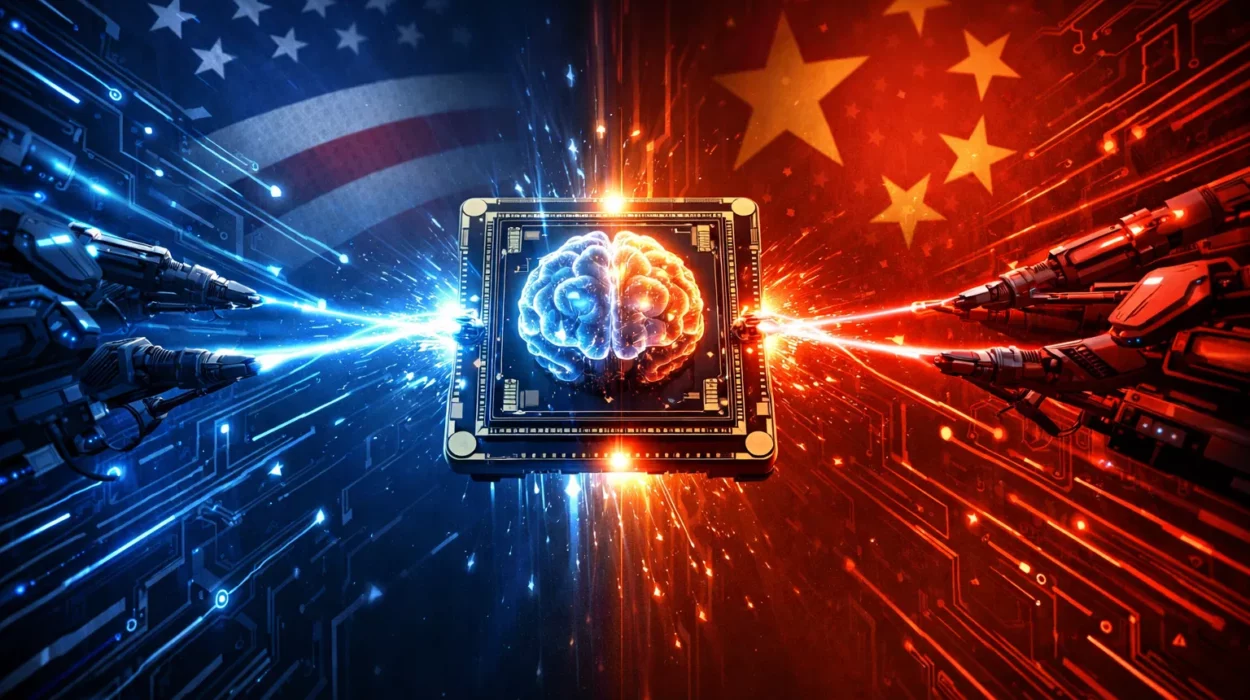
At the heart of this conflict lies the hardware. Without high-end GPUs—specifically those from NVIDIA—training the next generation of Large Language Models (LLMs) is impossible. The US has implemented strict export controls to prevent China from accessing cutting-edge chips like the H100 and Blackwell series.
| Strategic Pillar | United States Strategy | China Strategy |
|---|---|---|
| Hardware | Export bans and domestic manufacturing (CHIPS Act). | Massive investment in domestic lithography (SMIC/Huawei). |
| Talent | Attracting global researchers and open-source leadership. | State-led AI education and “Thousand Talents” program. |
| Data | High-quality, diverse internet data and English-centric models. | Massive surveillance data and localized mobile ecosystems. |
The Race to AGI: Sovereignty at Stake
While the US currently leads in software and model architecture (OpenAI, Anthropic, Google), China is rapidly closing the gap with models like DeepSeek and Baidu’s Ernie Bot. The goal is no longer just “better search” or “smarter chatbots”—it is Artificial General Intelligence (AGI), a technology that will redefine military intelligence, economic productivity, and scientific discovery.
“AI is the new electricity. Whoever controls the grid of the future controls the destiny of nations.” — Geopolitical Trend Analysis
Conclusion: A Bifurcated Future
We are witnessing the birth of a bifurcated tech stack. One world led by US-aligned standards, and another by China’s state-integrated AI. For global businesses and tech enthusiasts, staying informed on these trends isn’t just a choice—it’s a necessity for survival in the new silicon age.