
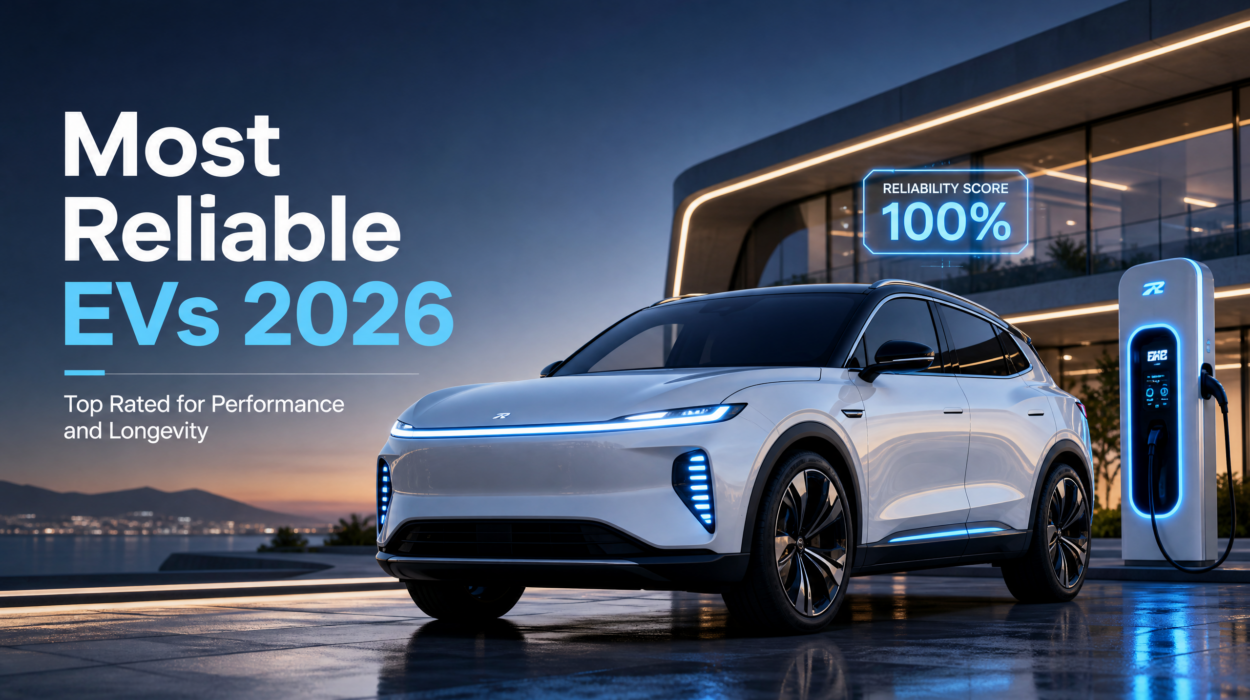
For over a decade, early adopters of electric vehicles (EVs) operated as real-world beta testers. Early-generation electric cars were frequently plagued by software glitches, erratic infotainment consoles, premature battery degradation, and manufacturing defects. Skeptics routinely cited these early teething troubles as proof that electric mobility could never match the mechanical dependability of traditional internal combustion engine (ICE) automobiles.
However, the automotive landscape has reached a historic inflection point. As we move through 2026, electric vehicle technology has matured from experimental “rolling laptops” into robust, battle-tested daily drivers. Automakers have poured tens of billions of dollars into refining battery chemistry, over-the-air (OTA) software management, and specialized EV assembly lines.
Today, buyers looking for dependable transportation no longer need to sacrifice reliability for sustainability. Industry data reveals that the most reliable electric vehicles of 2026 are meeting—and in many cases exceeding—the longevity benchmarks set by traditional gas-powered cars.
By eliminating hundreds of failure-prone mechanical components—such as complex multi-speed transmissions, timing belts, fuel injectors, spark plugs, and catalytic converters—electric vehicles possess an inherent mechanical simplicity that favors long-term durability. Coupled with major software turnarounds and refined manufacturing practices, 2026 represents the most reliable year in electric vehicle history.
Why EVs Are Becoming Inherently More Reliable Than Gas Cars
To understand the reliability jump in 2026 models, it is essential to look under the hood. The fundamental engineering difference between an internal combustion vehicle and a battery electric vehicle (BEV) directly impacts long-term maintenance and structural integrity.
+-----------------------------------------------------------------------+
|                    MECHANICAL COMPLEXITY COMPARISON                   |
+-----------------------------------------------------------------------+
| INTERNAL COMBUSTION ENGINE (ICE)     | BATTERY ELECTRIC VEHICLE (BEV)  |
| - 2,000+ Moving Engine Parts          | - ~20 Moving Drivetrain Parts  |
| - Complex Multi-Speed Transmissions  | - Single-Speed Direct Reduction|
| - High Thermal & Mechanical Stress   | - Thermal Management Systems    |
| - Frequent Oil/Fluid Changes Required| - Regenerative Braking (Low Wear)|
+-----------------------------------------------------------------------+
1. Minimal Moving Drivetrain Parts
A traditional internal combustion engine contains roughly 2,000 moving parts working under extreme heat, pressure, and friction. Components like pistons, crankshafts, valves, timing chains, fuel pumps, and complex multi-ratio gearboxes inevitably wear out over time.
In contrast, an electric vehicle drivetrain features approximately 20 moving parts. Power flows directly from the traction battery to an electric motor and single-speed reduction gear set, drastically reducing the points of mechanical failure.
2. Software Stability and Over-the-Air (OTA) Remediation
In early EV generations, minor software bugs often required physical dealer visits or entire module replacements. By 2026, automakers have perfected centralized electronic architectures. Software bugs that previously damaged reliability ratings can now be diagnosed and patched overnight via over-the-air updates, ensuring continuous vehicle optimization without disrupting the owner.
3. Brake and System Longevity Through Regenerative Braking
Unlike conventional cars that rely entirely on hydraulic friction brakes—causing frequent pad and rotor replacement—EVs utilize regenerative braking. By reversing the electric motor to slow the vehicle down while recharging the battery, mechanical brake pads experience minimal physical friction. It is common for 2026 EV models to travel over 100,000 miles before requiring their first brake pad service.
The Great Turnaround: How Flawed EVs Became Reliability Leaders
One of the most compelling narratives in the 2026 market is how automakers converted previously troubled EV platforms into top-tier reliability contenders.
The Ford Mustang Mach-E Triumph
A prime example of this industrial refinement is the Ford Mustang Mach-E. When initially released, early Mach-E batches faced criticism and mixed consumer review scores regarding software bugs and high-voltage contactor switch overheating.
Fast forward to 2026, and the Mustang Mach-E has staged an extraordinary comeback:
-
Auto Reliability Index Score: Earned 74 out of 100 points, claiming the top spot in its class.
-
Owner Satisfaction: Approximately 9 out of 10 owners state they would endorse the vehicle to prospective buyers.
-
Base Specs: Equipped with a standard 72 kWh battery delivering 264 horsepower and an estimated 250 miles of range at an accessible starting price point of $37,795.
+-----------------------------------------------------------------------+
|              FORD MUSTANG MACH-E RELIABILITY PROGRESSION              |
+-----------------------------------------------------------------------+
|  2021 Model Year J.D. Power Score : 65 / 100                          |
|  2026 Model Year Auto Reliability : 74 / 100 (Top Segment Winner)     |
|  Customer Endorsement Rate        : 90% Owner Satisfaction            |
+-----------------------------------------------------------------------+
The Ford F-150 Lightning Evolution
Similarly, full-size electric pickup trucks faced intense scrutiny. In 2024, the Ford F-150 Lightning was placed on Consumer Reports’ least reliable list due to first-generation battery management bugs and towing-induced thermal throttle issues.
Through focused factory re-engineering, hardware revisions, and upgraded cooling loops, the 2026 F-150 Lightning has turned its reputation around completely, emerging as a practical, durable workhorse capable of heavy job-site utility and stable long-term operation.
The Volvo EX30 Teething Resolution
The Volvo EX30, introduced as an affordable compact luxury crossover, experienced software stability issues during its initial 2023 rollout. By 2026, Volvo resolved these early software flaws. The vehicle now holds an above-average 63 out of 100 reliability metric, alongside an outstanding 86 out of 100 driving experience score in J.D. Power evaluations.
Key Contenders Among the Most Reliable Electric Vehicles of 2026
When analyzing the most reliable electric vehicles of 2026, several models across compact, crossover, and luxury segments stand out for their build quality, component longevity, and minimal repair downtime.
+-----------------------------------------------------------------------+
|                 2026 RELIABLE EV HIGHLIGHTS AT A GLANCE               |
+-----------------------------------------------------------------------+
| MODEL                   | SEGMENT       | KEY RELIABILITY STRENGTH    |
+-------------------------+---------------+-----------------------------+
| Ford Mustang Mach-E     | Crossover SUV | Top Index Score (74/100)    |
| Volvo EX30              | Compact Luxury| Resolved Software & Handling|
| Hyundai Ioniq 5 / 6     | Sedan/SUV     | 800V E-GMP Platform Stability|
| Tesla Model Y / 3       | Compact/Sedan | Refined Build & Supercharging|
| BMW i4 / iX             | Luxury Crossover| Proven Legacy Assembly    |
+-------------------------+---------------+-----------------------------+
1. Hyundai Ioniq 5 & Ioniq 6 (E-GMP Architecture)
Built on Hyundai Motor Group’s dedicated 800-volt Electric Global Modular Platform (E-GMP), the Ioniq 5 and Ioniq 6 have proven to be exceptionally dependable. Their ultra-fast charging capabilities (10% to 80% in under 18 minutes) are backed by advanced liquid-cooling thermal management that prevents long-term battery degradation.
2. Tesla Model Y and Model 3 Refinement
Tesla’s continuous manufacturing iterations have eliminated many of the panel gap and paint quality complaints of the past. The simplified interior control architecture reduces physical switches that could break, while Tesla’s proprietary battery management software remains an industry benchmark for structural battery pack health over high mileage.
3. BMW i4 and BMW iX
BMW’s approach of blending traditional luxury manufacturing precision with fifth-generation eDrive powertrains has yielded high reliability metrics. By utilizing familiar assembly lines and time-tested interior ergonomics, vehicles like the BMW i4 avoid the build-quality traps that often affect startup automakers.
Financial Impact: Long-Term Cost Savings of Reliable EVs
Investing in one of the most reliable electric vehicles of 2026 provides massive financial returns beyond avoiding mechanics’ shops. Understanding the total cost of ownership (TCO) reveals why reliable EVs are outcompeting gas cars in consumer value.
Estimated 5-Year Maintenance Cost Comparison
| Expense Category | Internal Combustion Engine (Gas) | 2026 Reliable Electric Vehicle |
| Oil & Filter Changes | $450 – $750 (10–12 service visits) | $0 (Not applicable) |
| Brake System Maintenance | $600 – $1,200 (Pad/rotor replacements) | $150 – $300 (Fluid check / minimal wear) |
| Transmission Service | $300 – $600 | $0 (Single-speed gear assembly) |
| Spark Plugs & Fuel Filters | $250 – $500 | $0 (Not applicable) |
| Exhaust & Emissions Control | $400 – $1,000 (O2 sensors, catalytic converters) | $0 (Zero tailpipe emissions) |
| Total 5-Year Maintenance | ~$2,000 – $4,050 | ~$350 – $800 |
Remaining Industry Challenges: Charging Infrastructure & Minor Bugs
While vehicle hardware reliability has reached unprecedented heights in 2026, prospective buyers should remain aware of residual industry challenges.
1. Charging Infrastructure Consistency
While the vehicles themselves are increasingly bulletproof, public non-Tesla charging infrastructure can still suffer from regional downtime, broken handles, or payment gateway failures. However, the industry-wide adoption of the North American Charging Standard (NACS) plug is rapidly normalizing charging experiences across all brands.
2. Minor Infotainment Glitches
Because modern EVs consolidate air conditioning, navigation, and media controls into single central touchscreens, an occasional infotainment reboot can feel jarring. Automakers continue to refine user interface stability to match the high reliability of their physical drivetrains.
Buyer’s Checklist: How to Choose a Reliable Electric Vehicle in 2026
To ensure you select a vehicle that delivers maximum longevity, follow this four-step evaluation checklist when shopping the market:
-
Verify Thermal Management Architecture: Opt for models featuring active liquid-cooled battery packs rather than passive air-cooled systems to ensure low battery degradation over 10+ years.
-
Review Multi-Year Track Record: Prioritize EV models that have been on the market for at least 2–3 production years, allowing the automaker time to iron out initial assembly and software bugs.
-
Check Warranty Terms: Look for manufacturers offering comprehensive 8-year / 100,000-mile (or better) battery capacity retention warranties guaranteeing at least 70% original capacity.
-
Evaluate Over-the-Air (OTA) Support: Ensure the automaker actively pushes regular OTA firmware updates to continuously improve power efficiency, charging curves, and safety systems.
Driving Confidently into the EV Future
The narrative surrounding electric vehicle durability has officially flipped. The most reliable electric vehicles of 2026 prove that electric drivetrains offer unmatched mechanical efficiency, lower operational costs, and superior long-term dependability compared to aging combustion technology.
Also Read: 10 Best Mercedes-Benz Models to Buy in 2026
With iconic models like the Ford Mustang Mach-E, Ford F-150 Lightning, and Volvo EX30 proving that early engineering hurdles can be successfully resolved, consumers can finally transition to electric mobility with complete peace of mind.
By choosing a modern, highly rated 2026 EV, you are not just purchasing a cleaner ride—you are investing in years of hassle-free, low-maintenance transportation!